- Wildlife webcams: See here for an example collection. This seems like one of the simplest ways of conveying the beauty and changing aspect of the nature that is really not that close to many of us city (or suburb) dwellers. One Step Beyond: make a Roku channel and add sound. The Roku channel should default to a rotating "best of" collection and change every day. Somebody should provide this to doctors offices / waiting rooms in general and just have a strip of silent advertising on the bottom or the side.
- Feedback & Tracking: Ask Me Every is a great example of this topic. Their system sends and email or a text every day at a certain time asking a question that you set up and then you provide feedback. It tracks your information (whatever you want). It keeps you accountable and helps you track your progress. Want to drink less alcohol? Have it send you a message each day when you'd be done drinking and honestly One Step Beyond: make it into an app. Put the data into a broader data ecosystem for the user so that it could be integrated with custom scripts or display of the information.
- Easy Maintenance: Every new product that you buy should get registered into your maintenance database. If a smart product, it can add entries in the db when maintenance needs to be done. If not smart, calendar entries can be added. Ideally, this would be facilitated through the manufacturer, but could be done totally outside of that scope. It would have to be super easy for people to follow through, though. One Step Beyond: rate all products for how much time and money they will take in maintenance. Want to buy that motorcycle, well, be ready to spend 8 hours realigning the valves every 5k miles, or that other motorcycle only needs it every 20k miles. Should be part of everybody's purchase decision but it's not (directly) now, people rely instead of rough brand confidence measures.
- [More to come!]
Sunday, August 2, 2015
Simple Ideas
This is a blog post to just talk about some simple use of technology and the potential for that technology to make the world a better place. These are not profound ideas and many have been done already, but generally just examples of what I've been thinking about recently. Here we go:


Wednesday, July 22, 2015
The Future of Flops
My son occasionally gets really excited about how the technology of the future is going to be so "dank". I agree, it will. Today, he was focusing on video cards, which then led him to look at supercomputing stats and expectations. He kept repeating, "A billion billion calculations per second. That's insane!" And it is. Insane.
As of now, many people involved in high performance computing believe that we will reach the exaflop level in 2020 (or there about). We have some ways to go, given the current peak speed of only ~ 33 petaflops. That said, there is a planned computer at Oak Ridge that could reach 300 petaflops. From there, it's only a factor of three. And desktop computers have been running only about 10 to 15 years behind the super computers (though that pace may not continue). It all goes well, in my lifetime, we could end up with an exaflop's worth of power on our desktop.
There is a great Wikipedia article on Exascale Computing, which I won't attempt to improve on. But noteworthy, is that it is believed that the current human brain is roughly a 1 exaflop computer. So, it might not be crazy that a device that is sitting on your desk, could be as "smart" as you. Scary, maybe, but exciting, too. What will be better? Here are my thoughts on how the future changes, from the obvious to the super speculative.
As of now, many people involved in high performance computing believe that we will reach the exaflop level in 2020 (or there about). We have some ways to go, given the current peak speed of only ~ 33 petaflops. That said, there is a planned computer at Oak Ridge that could reach 300 petaflops. From there, it's only a factor of three. And desktop computers have been running only about 10 to 15 years behind the super computers (though that pace may not continue). It all goes well, in my lifetime, we could end up with an exaflop's worth of power on our desktop.
There is a great Wikipedia article on Exascale Computing, which I won't attempt to improve on. But noteworthy, is that it is believed that the current human brain is roughly a 1 exaflop computer. So, it might not be crazy that a device that is sitting on your desk, could be as "smart" as you. Scary, maybe, but exciting, too. What will be better? Here are my thoughts on how the future changes, from the obvious to the super speculative.
One Step Beyond
- Better video games: Micro-textures? Water physics modeling? Good NPCs?
- Emersive Virtual Reality: like really emersive. Imagine virtual worlds that have been built over years with powerful engineering and artistic tools.
- Even less human-provided customer service: Overseas call centers could be a thing of the past. Voice recognition will be virtually perfect (instead of really good like it is now). Small call-centers here to deal with the only most complex customer issues.
- Suggestive Prompts: Personal assistant software will go from mildly annoying to super helpful. We'll get prompts to remind of us of meaningful things. Amazon Echo on 'roids. Stupid example: every time I head into my kitchen in the morning, I have my news briefing played. But I have to ask for it. Why shouldn't Alexa just start playing it a few days after I ask for it. Or at least ask. Fair enough that we don't need a exa-scale computer to do this, but I'm thinking that this kind of learning and intelligence will be ubiquitous.
- MORE TO COME!!
Sunday, July 19, 2015
The Key to Keeping Cool?
It's hot today where I live. I decided that it'd be a perfect day to test out some Qore Performance sleeves and shorts to see if I could still have a reasonably comfortable motorcycle ride in my ATGATT getup. The TL;DR is yes, for a while. Read on if you want to know more. And in full disclosure, I'm friends with one of the guys who started the company, so I'm probably a little bit biased here. Also note that the Qore system was not designed specifically for motorcyclists, I just thought that it could be useful.
First, let me describe what I did. I suited up, road through Great Falls and Sterling Virginia and back in the afternoon of one of the hottest days this summer. All in all, I was out about 90 minutes, excluding my stop at the grocery store on the way home.
- Pants: Inexpensive pair of Bilt riding pants with no venting (nor insulated).
- Gloves: Inexpensive mesh Bilt gloves
- Boots: Inexpensive Bilt boots (there is a pattern here - someday I will upgrade all of this Bilt gear).
- Helmet: Yes.
- Qore sleeves and shorts. Here is what I looked like before putting on a t-shirt and my jacket and pants:

First, let me describe what I did. I suited up, road through Great Falls and Sterling Virginia and back in the afternoon of one of the hottest days this summer. All in all, I was out about 90 minutes, excluding my stop at the grocery store on the way home.
Gear:
- Jacket: Mesh Joe Rocket. Very free flowing when the liner is taken out, which it obviously was for a ride on a day like today.- Pants: Inexpensive pair of Bilt riding pants with no venting (nor insulated).
- Gloves: Inexpensive mesh Bilt gloves
- Boots: Inexpensive Bilt boots (there is a pattern here - someday I will upgrade all of this Bilt gear).
- Helmet: Yes.
- Qore sleeves and shorts. Here is what I looked like before putting on a t-shirt and my jacket and pants:

Pros of Qore:
- Absolutely cools you while you ride. Noticeable coolness except on your head.
- Well-made gear.
Cons of Qore:
- As I noted, the system was not designed for motorcycling in terms of the placement of the gel packs. I think that this impacts the shorts mostly. The cooling gel pockets should be moved to accommodate a seated position if it is to be sold to riders.
- Effectiveness Time: As noted above, I rode about 90 minutes. After about 45, I could feel no measurable cooling. The gel packs on my arms were still in place, but almost at body temp. The gel packs on the shorts were still somewhat cool, but just barely. My guess is that the mesh nature of my jacket causes a lot of heat transfer on the side of the gel packs not to my body, removing much of the coolness benefit that I could be receiving.
Conclusion:
Get something like the Entrosys A/C system if you want long term cooling on your motorcycle, but for shorter trips like commuting, the Qore system might be a good option for you. I'm not going to let hot weather be an excuse for me to get out and ride, especially if its a crazy sunny day. You can buy an additional set of gel packs and store in an insulated bag they provide to recharge partway through a longer ride. Or, at a restaurant, ask for an extra glass of almost full ice water and recharge your gel packs that way.One Step Beyond:
Here are some thoughts on improving the product:
- Directional gel pads: insulate one side and leave the other uninsulated. The side facing the user would be uninsulated. This maximizes heat transfer between the intended side while minimizing it to the other. By varying the amount of insulation on the side facing the user, you could tune how long the gel packs would likely be effective for. Do you want a lot of cooling or just a little?
- One time endothermic reaction gel pads: opposite of heating pads. Ideally, these would last 4 hours or so.
- Electrify the system: introduce solid-state thermoelectric plates/pads that pug in to the bikes 12V system. In the summer, put the cool side toward the user. In the winter, do the opposite (though resistive heating would probably be more efficient). Imagine an ADV ride up a high mountain - cooling in the morning, heating in the afternoon!
Monday, June 29, 2015
Trusted Shopper Network
When reading about the impending doom for employment due to automation in the retail sector, it got me thinking about how jobs could really be reduced in the retail sector. The automation efforts that I have seen so far look like glorified vending machines. And perhaps we will see more and more specialized vending machines for certain retail goods. (That said, I have never seen somebody purchasing something at a Best Buy machine in an airport. Not once.) But I think that there is a large segment of retail that relies on touch and fit before the individual is willing to make the purchase. Think clothes and shoes. To a lesser extent, this would include home goods. I'm thinking mostly of a clothing or shoe store in my below description of the world.
Employees in a retail establishment perform the following functions:
Employees in a retail establishment perform the following functions:
- Chiefly, performing the mechanics of the purchase transaction.
- Stocking shelves / racks / etc.
- Cleaning / straightening / arranging of goods (sometimes after customers have messed them up)
- Theft prevention, even if only by their presence, they are discouraging otherwise mostly honest people from taking things that they haven't purchased.
- Providing fashion advice: "does this look good on me?"
- Performing inventory (infrequently)
- Handling exchanges / returns.
Could we ever get to a clothing store with no employees? Here's how.
Retail One Step Beyond
Set up a "Trusted Shopper Network". Only people in the network would have permission to enter stores with no employees and shop. The terms and conditions would be strict and monitored. Any instance of cheating (attempting to remove merchandise from the store without paying - perhaps by removing an RFID tag) results in a seven year ban. A credit card remains on file with the network and handles payment security for the merchants. Similar to a 24-Hour Fitness, membership in the network would give you the right to enter the otherwise unoccupied store. It could be made available 24 hours a day.
I think a network here would be much more compelling than just an individual store setting up it's own system. First, it makes the downside of customer cheating to be larger. This wouldn't be a big deal when the network was tiny, but if it encompassed half of your shopping opportunities, you'd think twice about attempting to cheat. Second, it allows various store owners to share in the development of standards and intellectual property to make this work. Third, from an awareness/education standpoint, it will take some time for people to understand what this is all about, so sharing in the advertising costs would be beneficial for all vendors in the trusted network.
Then, the store would be optimized to handle all of the activities now done by a person:
- Purchase Transaction: Completed automatically as you exit the store, via a reading of the unique RFID tags on the clothes. A receipt is emailed to you as soon as you exit.
- Stocking: Robots. Likely result in a simplified layout at the present moment.
- Clean-up: Roombas and robots. Post-changing room clothes would be required to be rehung and put in a standardized rack that a robot could restock.
- Theft Prevention: Substantial automated video monitoring for sketchy behavior. Any removal of RFIDs prior to exit gets you banned from the store. Perhaps any clothing that you remove from a rack needs to be scanned by you (tapped to your phone) to tie you to that ID right away.
- Fashion Advice: Replaced by facebook or other social media to get input from your friends. "Expert System" advise could also be made available by the store for body shape / BMI / age.
- Inventory: Constantly monitored via RFID tags.
- Exchanges/Returns: Returns box accessible from outside the store. All items to be returned are required to still have the RFID tag still attached. Perhaps humans have to be involved, at least now, at rehanging the returned clothes and ensuring they are in new condition (not worn and returned).
What might be some other advantages to this approach?
- Retail flexibility: Part-time stores. The same retail space could be repurposed as a Christmas-themed outlet or alternatively costumes near Halloween and then bathing suits in spring. This could be as much a platform for experimentation and seasonal content as anything else. Clearing out the old and adding the new should be quick and simple. Currently, it feels like we have a very inflexible model. Fashion experimentation could be much cheaper if a brand doesn't have to set up its own retail network, but could rent 20% of like-positioned floor space around the country.
- Improved Shopping Experience: No more hassling by employees.
Why It Won't Happen
- Expense: retail employees are cheap and very flexible at handling the required functions laid out above.
- Limitations in presentation: Clothes and fashion items sell because they look good. At present, layouts and presentation could be negatively affected to allow for automation.
- System Integration: Lots of specialized and customized software needs to come together to make this happen.
- "Personal Service": a segment of the population still think that they want a human involved in the interaction. Some clothing purchases are admittedly "high touch".
[Updated 2016-12-05] See Amazon's efforts in this regard. Perhaps this will happen!
Sunday, June 28, 2015
Thoughts on "A World Without Work"
I found A World Without Work, recently published in the Atlantic, to be a fascinating read. I think the author does a good job discussing a meaningful trend (lower labor force participation rates for "prime age" people) and discusses how one of the major drivers for that change (technology) might continue to affect us as a society.
I, for one, welcome the idea that people could be freed from the shackles of being forced to work. (That said, I suspect that some portion of us are already freed from those shackles without taking advantage of it. Instead, we spend our extra money instead of saving it for down-times.) I think that technology has great promise in freeing us from even more of where we spend our time today. That said, I cannot foresee a world where there is truly no work. More likely, we end up in a bi-modal world where many people do not work (or work only sporadically) and high earners keep working hard and enjoy the benefits of their labor. At the very least, we need people to design and repair our machines that do the work for us.
In some ways, the world could be bimodal, as well. Just like advancements in average levels of education haven't helped most of the developing world (nearly as much as history suggested that it would), could there be an outcome where developed country standards of living shoot way ahead of less developed, despite there being little work involved? If so, how does immigration work in that environment? (i.e., there should be a crush of people wanting in to the work-free countries).
Here are some random thoughts on where we could benefit from machines:
I, for one, welcome the idea that people could be freed from the shackles of being forced to work. (That said, I suspect that some portion of us are already freed from those shackles without taking advantage of it. Instead, we spend our extra money instead of saving it for down-times.) I think that technology has great promise in freeing us from even more of where we spend our time today. That said, I cannot foresee a world where there is truly no work. More likely, we end up in a bi-modal world where many people do not work (or work only sporadically) and high earners keep working hard and enjoy the benefits of their labor. At the very least, we need people to design and repair our machines that do the work for us.
In some ways, the world could be bimodal, as well. Just like advancements in average levels of education haven't helped most of the developing world (nearly as much as history suggested that it would), could there be an outcome where developed country standards of living shoot way ahead of less developed, despite there being little work involved? If so, how does immigration work in that environment? (i.e., there should be a crush of people wanting in to the work-free countries).
Here are some random thoughts on where we could benefit from machines:
- Clothes folder: I'm ok with managing loads going into and out of my washer and dryer, but where is the folder? Dump in a pile of clothes, the machine recognizes what each article is and sorts and folds automatically. I don't even care if it puts it away; I can manage that. If this comes to past, why not a closer linkage between machines where you put dirty clothes in one end and out on the other end pops clean, dry, folded clothes. Maybe these never get built for houses, but on an industrial scale with a laundry service, this would have to work, no? Coupled with drone delivery, it'd be genius.
- Stove-based Auto-Cooker: These are coming! Looking forward to a practical version. I'd expect to see a commercial application of this first. [Aside: I think it'd be a great restaurant concept to have these guys in the center making your meal (think 8 in an octagon in the center facing outward with customer tables arranged surrounding it). When the robot was making your meal, your table's color would flash for a bit, alerting you to pay attention. Gimmicky for sure, but could be a lot of fun (at least until the novelty wore off). This might even work better with no servers - you get alerted when your meal has started and when it's done and you go pick it up. MTO and fine dining quality with self-service and no tips. A winning concept?] And if we live in a world where robots cook our food, I'd imagine they can clean our dishes, too.
- House builder: This would actually need to be a series of specialized machines, so I'm guessing we'll tackle this issue from a number of different dimensions, spelled out below. I don't see major systems (like the furnace, air conditioner and hot water heater) being automatically installed. Perhaps 3-D house printing is the future, but for stick-built homes like dominate in the US, here's what we'd need.
- Bricklayer: Driveway. Walls / other.
- Stick-built factory assembly: Robotic assembly of pre-built sections. This may already be a thing.
- Stick-built assembler: I haven't seen one yet, but imagine a machine that can put all of the pre-fab sections together with no instructions. It was all designed on a computer in the first place (at least this is probably the overwhelming majority of normal houses). It would also need to be large enough to put on the roof. Likely a "placer" and an "affixer" to nail or otherwise fasten it in place.
- Shingler: lays felt and asphalt shingles autonomously.
- Utility holer: drills all holes for plumbing and electrical wiring. Not only does it drill varied sized holes depending on the function, it sprays the hole with a code (i.e., blue for electrical, green for plumbing, yellow for ethernet, red for audio). Much of this could/should actually be done in the factory.
- Utility runner: actually runs wires & pipes through all of the holes that the driller made. Probably much harder than the Utility holer to pull off.
- Tile/Wood Flooring module: Lays down, cuts, etc. a tile or wood floor.
- Insulation: Installs perfect amount of expanding insulation in walls. Also applies vapor barriers.
- Drywall Installer: Lift position and screws in drywall. Both walls and ceilings. Precut all necessary holes.
- Drywall Mudder: Seals drywall seems. Some crude devices already exist here.
- Window/Door setter: Specialized gear to perfectly install windows and doors
- Painter: runs around the house
- Siding installers: moves around the house to perfectly set up vinyl siding.
- Small Landscaper: Autonomous mini-bulldozer that will push dirt around to the desired final outcome with no human intervention. Built-in avoidance of people and other robots.
- Autonomous cars & trucks: Well covered elsewhere. They can't come soon enough.
- Autonomous ships: They are on their way, too.
- Autonomous/remote mining: Get the miners out of the shafts. Can't come soon enough, as well.
- Autonomous Landscaping & Farming: We have mainstream mowers, how about bush management? Believe me, I would only have plants on my property that could be managed by these devices. Also, a great opportunity to mix in other technologies. Bushes need trimming at most a couple of times a season. Just rent the services of this complex machine: have an autonomous vehicle deliver it to the property and have it manage the bushes and return home. Also, autonomous fertilization and weeders. Really, roomba needs to make a "gardenba" to weed my small herb garden. Weather-proof and solar charged would be a nice touch (just leave it in the garden and it does the work). Likely, weeds will have no way of adapting to physical disruption. On a larger scale, can we be too far away from some crops being planted, weeded, fertilized and harvested by autonomous equipment?
- Auto-Grocery: Order on-line and either have it delivered (via autonomous vehicle, obviously). But if not, show up at the grocery store and just pick up your bins of food. You don't have to walk through the store yourself, it has been picked and sorted for you. I think this is where Amazon Fresh is heading and I love the concept. This will, I think to be successful, require some standardization in the handling of sensitive fresh produce. Imagine purpose-built (and reusable) plastic cages for individual tomatoes or cucumbers. Inefficiencies in packing will be more than made up for by efficiency (and product quality) gains at the point of sale/delivery to the customer.
- Fabric cutting and assembling: I don't see automated sewing of clothes to be too far down on the horizon. Fabric physics is being modeled better than ever. Will anybody bemoan the end of sweatshops?
Where are some places that machines will not likely change much?
- Fixing broken stuff: This feels like something that will be very hard to automate. We still rely on very very simple technology for much of our life. Valves and toilets, for instance. When they break, it's not likely to be a robot assessing what is broken or fixing it. For all of the computer assist in diagnosing cars, it still takes a person using tools that have advanced little from the 1960's to swap out a bad part. Some maintenance areas could still benefit substantially from a robot assist. Imagine Costco investing in automated wheel removal / tire removal / tire installation robot.
- Clothes/shoe shopping: Lots of people like to browse and touch. Technology will have a hard time changing this too much. Though note that we spend less of our disposable income on clothing than in the recent past. More on this in a future post.
- Live Entertainment: I have no interest in seeing a live robot band. Sort of a mis-statement anyway.
- Fashion / Aesthetics / Interface design: A machine can't design something that looks beautiful and makes sense to us. Machines will continue to assist and potentially in more meaningful ways. But it seems obvious to me that there always need to be a guiding hand of a person.
- Storytelling: In all its various forms: books, movies/TV, songs, theater. The human experience can only be described by humans.
Saturday, June 27, 2015
Floating Hotels
Popular Mechanics had this brief, picture-filled article about a floating hotel concept. Could result in a spectacular way to enjoy a particularly scenic lake.
One Step Beyond
Make them autonomous pods that will take you on a leisurely cruise around the lake that you are visiting. You will dine with a beautiful sunset, and wake to a beautiful sunrise. Perfectly programmed to optimize the experience for you and the pods around you. Get a double room by linking two of them together.Will It Happen
Not likely. But it would be super cool if it did. If it does, it will be a luxury experience, at least for the next 20 years or so. Everything marine-related costs way more than simple land-based construction/maintenance.Wednesday, June 3, 2015
There's an Echo in Here
My Amazon Echo arrived yesterday after a long (six month-ish) wait. I was excited to have it, but my excitement quickly turned to frustration. Let's just say that setup did not go smoothly.
Setup was hampered by the Amazon Echo app crashing (the first attempt) and then not being able to connect to one of my wifi networks. Why, in 2015, do I need to enter the wifi password when the device that is connected to the echo has the wifi password in it? Doesn't make any sense. I gave up on setup (which appeared to be hanging) and ate dinner with my boys.
After dinner, I moved closer to my wifi access point and thought I'd have to go through setup again. However, when I plugged the Echo back in, it connected right up to my network and said that it was ready to go. Exciting. So what to do with it. I decided that I'd mostly just try things rather than read directions (I'm a dude, after all) to see how well the natural interface would work.
I asked a few questions and for a joke. It doesn't understand much. It did start playing music for a reasonably obscure band that I like (Innocence Mission) after just asking it to. Excellent. (It's probably time for me to get a Prime Station set up). It paused when I asked it to and got louder and softer, too. Also, this morning, I asked Alexa for the news and got a reasonably useful NPR briefing. I think that this will become a habit for when I'm making breakfast to listen to this. I do love the fact that there is no friction at all - ask and ye shall receive.
I've since looked online to figure out what things are possible currently with the echo. I've since done some more setup (for my commute traffic, customized the new briefing, linked my Google Calendar). Looking forward to trying to use it to dim the lights in my living room (I have Philips Hues).
Last night, I then tried to get it to talk to me about Amazon. Something I expected it would be familiar with. "Alexa, what is the last Amazon streaming title I've watched." No comprende. "Alexa, what is the last purchase I've made on Amazon" Didn't understand it. Hmm. Got me thinking what sorts of information the Echo might be useful in passing along. What would take it One Step Beyond?
Setup was hampered by the Amazon Echo app crashing (the first attempt) and then not being able to connect to one of my wifi networks. Why, in 2015, do I need to enter the wifi password when the device that is connected to the echo has the wifi password in it? Doesn't make any sense. I gave up on setup (which appeared to be hanging) and ate dinner with my boys.
After dinner, I moved closer to my wifi access point and thought I'd have to go through setup again. However, when I plugged the Echo back in, it connected right up to my network and said that it was ready to go. Exciting. So what to do with it. I decided that I'd mostly just try things rather than read directions (I'm a dude, after all) to see how well the natural interface would work.
I asked a few questions and for a joke. It doesn't understand much. It did start playing music for a reasonably obscure band that I like (Innocence Mission) after just asking it to. Excellent. (It's probably time for me to get a Prime Station set up). It paused when I asked it to and got louder and softer, too. Also, this morning, I asked Alexa for the news and got a reasonably useful NPR briefing. I think that this will become a habit for when I'm making breakfast to listen to this. I do love the fact that there is no friction at all - ask and ye shall receive.
I've since looked online to figure out what things are possible currently with the echo. I've since done some more setup (for my commute traffic, customized the new briefing, linked my Google Calendar). Looking forward to trying to use it to dim the lights in my living room (I have Philips Hues).
Last night, I then tried to get it to talk to me about Amazon. Something I expected it would be familiar with. "Alexa, what is the last Amazon streaming title I've watched." No comprende. "Alexa, what is the last purchase I've made on Amazon" Didn't understand it. Hmm. Got me thinking what sorts of information the Echo might be useful in passing along. What would take it One Step Beyond?
One Step Beyond for the Echo
One reason I bought this device is that I thought Amazon was likely to continue to improve the features. And given it relies on cloud-based information retrieval and comprehension, the hardware purchased now should continue to work.
In my view, here are the areas where the Echo could be useful:
- Likely obvious from my above discussion: better integration with Amazon. Let me ask questions about my account. What was the last thing I ordered? When will it arrive? Let me ask how much Crest toothpaste costs on Amazon. If I want to buy it at that point, let me just "One Voice" order it. Frankly, asking me to confirm the order is pretty easy to do. Probably no patent opportunity here. [Update: looks like voice purchasing is already a thing - I will have to explore further].
- Integration with Roku & Amazon Prime streaming. Let me control the Amazon app on Roku from the Echo. This should be trivial? Searching would be so so much easier with voice than the current on screen keyboard. Amazon should not limit themselves to the Fire, just because they make the hardware.
- Allow personal "databases". Pretty simple concept. You tell the Echo, "Alexa, record in wallet, $33 end." You've previously defined a database called wallet that has two fields, timestamp and amount. The Echo inserts a row each time you update it. More useful than just a to-do list. Perhaps a more complicated example: "Alexa, record in feelings, overall 'wonderful' and record in feelings, description 'today was a wonderful day. I got a raise and the sun was shining!' end." I think that the voice recognition is good enough that you could reasonably use enum fields. If you do, and the Echo wasn't able to parse your statement into one of the options, it could ask for clarification.
- Allow you to set up events. For instance, "Alexa, I'm home!" The Echo would then perform a series of actions including bringing up the lights and then reading the news. After the news, Alexa asks if you want to record how much money is in your wallet. "Alexa, I'm going to bed" could trigger a series of things, including the entry into a database of what time you went to bed. [Update: looks like this is partially, if not fully, addressed with IFTTT support that has been somewhat recently added].
There must be a ton more here and I will update as ideas form.
Saturday, March 7, 2015
Fitbit Surge: Not a Review
At this point, I don't think the world needs another Fitbit Surge review. For instance DC Rainmaker's review is pretty thorough and I would have a hard time adding too much (it really is in-depth). I can relate my own experience and suggest some (obvious) improvements to the device/Fitbit.
[Updated 2015-05-23: fitbit has made some changes and I've been using it for a few months now -- see updates noted below.]
[Updated 2015-05-23: fitbit has made some changes and I've been using it for a few months now -- see updates noted below.]
My Experience
Overall, I've had a positive experience:
- Battery life has been reasonably good. I'm charging it every 3 or 4 days, depending how many activities I'm recording. [Update: I'm still pretty positive on this point. I've gotten into the habit that if I'm ever watching TV on the sofa, I plug the watch in. So far, it's worked with only modest thinking about it. I do make sure that I fully charge before I go on work trips so that I don't have to worry about it on them.]
- The heart rate monitoring is probably better in my experience than in DC Rainmaker's. That said, there are some very annoying drops during activities like spinning that are just incredibly frustrating.
- The interface to record activities is pretty easy to use. It took me a week to get completely comfortable, but it works well and I can easily move from a weight lifting session to a treadmill run in a couple of seconds. [Update: I do this all of the time. Very easy. Great interface.]
- The Surge does not really work well with long-sleeved work shirts. I generally wear french cuffs and for the Surge to work, it has to be too high up on my wrist. That said, its better than my other watches in terms of being able to type when I'm wearing it. [Update: I wear short sleeved shirts to work in the summer. This hasn't been a problem recently.]
- I used my Fitbit One to wake me up in the morning, but had a few instances where it didn't. The Surge's vibrations have been consistently strong enough to rouse me from my slumber.
- I much prefer the automatic sleep detection over having to tell my One when I'm going to bed. It's been accurate from what I can tell and even properly captured a mid-afternoon nap that I took a week ago.
- I appreciate the default watch face (Flare) that indicates on the minutes, how active you've been since the start of the hour. It is a little bit annoying that you can't see past hours, but I understand how that would make the watch face less understandable. Much more easily accessible information than on the One.
- The long and the short of it is that I've been wearing it non-stop since it arrived on February 16, 2015. [Update: still wearing it non-stop. I love the multi-device capability (see below).]
One Step Beyond
Despite my general satisfaction with the Surge, I have some suggestions on how to improve. These are not hardware suggestions, but things that Fitbit could change immediately and improve their product. It's in rough order of preference on my part. Here goes:
- Allow me to use multiple Fitbit devices to track my activity: It seems obvious to me that I wouldn't want to wear a Surge 24x7. That said, I'm one of those people who wore the Fitbit One for two solid years missing, perhaps, only 1 or 2 days and those were missed accidentally. I always wore the One unless I was swimming or showering. When I set up the Surge on my account, it automatically dropped the One. Why? It would be so much better to have the option to use either or both and then have Fitbit pull the data together. I especially don't want to wear my Surge when I go out to dinner or a bar. Sure, it buys me some geek cred, but I don't need any more of that. I could do with less. But it'd be nice to give my wrist a break every once in a while. I'd just leave my One plugged in and charging and then just grab it and go when the Surge is not the best option. [Update: when fitbit updated their systems to allow this, I immediately set up both devices - my One and my Surge. It works great. I love the flexibility.]
- Improve the way Calorie Burn is calculated when the heart rate signal is lost: I've noticed that the Surge will often lose my heart rate when I'm spinning. How it calculates calorie burn under that condition is absurd. Despite the heart rate graph showing a nice gradual connecting line, the calorie burn calculation assumes that you had a low heart rate during that period. See this picture (the portion highlighted by the blue box did not have any heart rate readings from about 13:00 to 16:00 and thus they dropped the calorie burn to essentially nothing): [Update: this is still an issue.]

- Allow me to upload activities from other devices to my Fitbit account: Given some of the limitations of the Surge (see DC Rainmaker's comments on GPS accuracy), its more likely that I'm going to be wearing my Garmin 405 (or 920XT if I go crazy and get one) for the time being when I cycle or run outside. I'm totally good with wearing a heart rate strap for these activities, so the Surge really doesn't get me much. There have to be a fair number of hard-core "Quantified Self" people out there (like me) for whom would find this a good addition. And don't make this a premium service. This is only necessary because the Surge has defects or limitations - Fitbit don't penalize your customers twice. [Update: I still can't do this to my knowledge. It shouldn't be that hard to extend the "Log Activity" interface to allow this. fitbit really should do this.]
- Give me real access to my data: Not even with the premium service can the individual get intraday data. I'm going to look into the hacking available with Galileo, but I shouldn't have to do this. I made the data. It is mine to begin with. [Update: I will likely complain about this for some time.]
- Running calibration: I ran a solid mile this morning on the treadmill after warming up. My Surge only counted 0.81 mi total. The total should have been 1.2 mi (another 0.2 mi in warm-up and cooldown). Why isn't their a reasonably simple interface on the watch to go through a calibration. Right now, all I can do is put in my "Stride Length" and "Running Stride Length". This seems both overly simplistic (let me calibrate at 6 mph, 8 mph & 10 mph) and not particularly easy. Frankly, the treadmill and the Surge ought to be talking to each other, but that is not a software issue.
Here are my hardware suggestions:
- Make it actually waterproof. Like certify that is the case. And potentially even make it useful in the pool. Garmin is already there.
- Fix the GPS (cycling) defects. Maybe this could be improved via the software? [Update: Cycling works, but gets meaningfully different answers than my phone does. I still record on Strava for bike rides given that I mount my phone on my handlebars anyway. The Surge underestimates mileage by several 10ths of a mile on a 20 mile ride. I'm reasonably disappointed with the accuracy for a device on sale in 2015. My Garmin Forerunner 405 from five years ago is better. I do like that I can at least record the activity. But their lack of analytics forces you to use multiple sites/recordings of your activity.]
- Detachable Strap: Make into a device whose strap can be detached (like the 920XT). That would eliminate the need for my first suggestion above (but at the same time they should add an option to turn off the heart-rate monitoring for times it's sitting in your pocket). I'm also reasonably concerned that I don't get a long lifetime out of this watch due to the strap. Are others not buying it due to that reason?
- Connect with Devices: Talk to treadmills and stationary bikes. More than just one way. Display my heartrate on the treadmill. The treadmill should tell the watch exactly the distance, speed and angle I was running or walking.
Let's here your thoughts on improvements, too!
Saturday, February 7, 2015
Sleep Well!
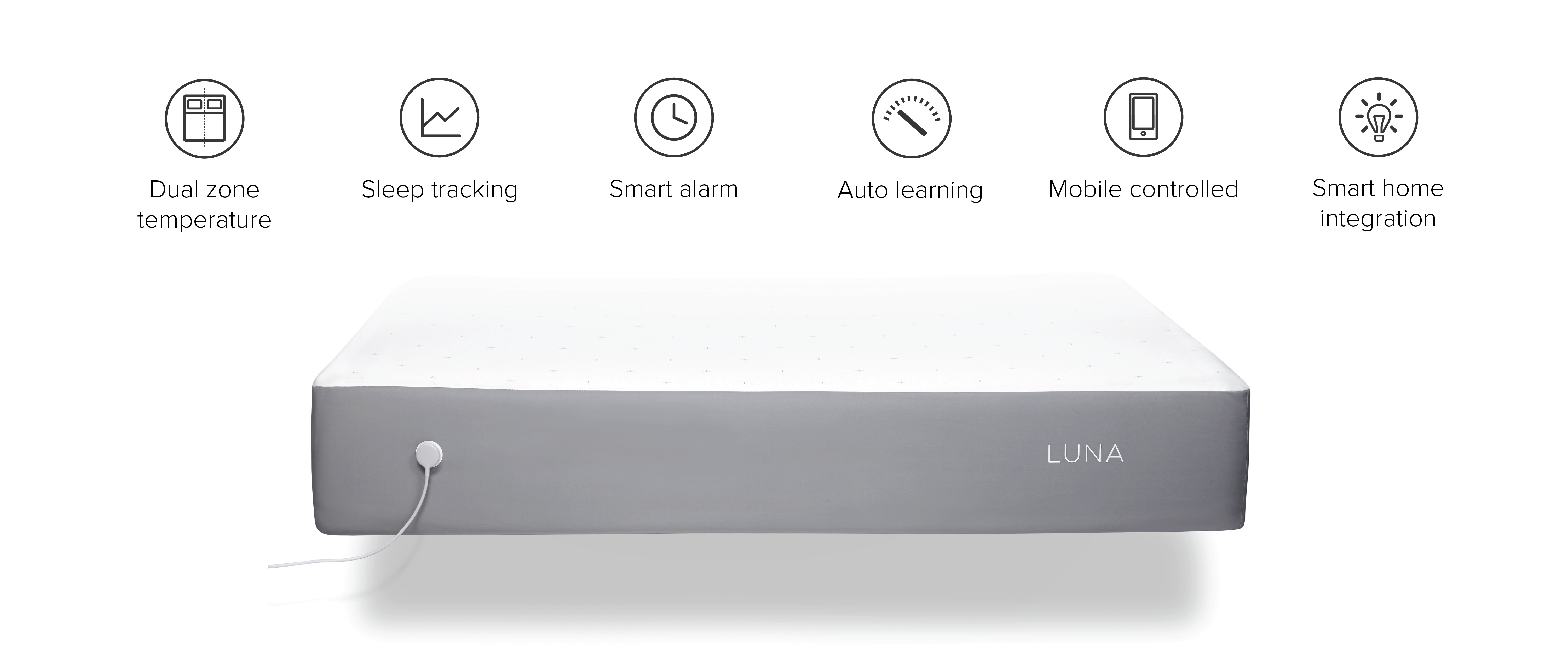
Another gadget that you didn't know you needed. Kudos on a perfect product name for this gadget. My only question is whether it will fit over a mattress with a pad on the top (mine). I'm going to wait for this one to hit the street and get some real-world experience.
Monday, January 19, 2015
Recent Moments of (Gadget) Weakness
Yesterday, I bought a fitbit Surge after reading all about the watches on display at CES. Today, I ordered an Amazon Echo. The latter won't be here until mid-year, but I'm expecting the Surge in about a week. I'll be posting shortly when I've had a chance to gain some experience with it.
Saturday, January 17, 2015
Another CES Has Come and Gone
So I have let CES 2015 go by without any comment. Partially because I've been distracted with work and partially because I was waiting to see what all would be reported on, given that I'm not lucky enough to make it out there. Here is my (non-exhaustive) take on some of the cooler products or categories that made it to CES (or at least reported on in concert with CES) this year:
As conceived, this is a single pan meal maker. That can mix up the ingredients with a spinning robotic spatula. To me, it looks more concept than useful approach to robotically crafted meals. Like bread machines, this product's limited usefulness will likely mean that it is no more than a fad device (like buying a juicer - you'll use it for a few months and then it will make its way to the back of your cabinet and ultimately to a garage sale when your children are moving you out of your house, you hoarder).
This is a very cool initial effort. Hopefully, it gains some traction and attention and spurs further development. Here are a few thoughts on how this device could go a Step Beyond:
Food Robots
I think that this is a separate category from appliances. And these are a good bit more interesting (at least to me) than the bread makers of the late '80s that took my neighborhood by storm.
Rotimatic
Great product video walking you through why you need one. I'm not Indian, but I don't think it matters. Sounds like a great idea. If you eat rotis routinely, $600 probably doesn't seem too bad.
Cooki Robotic Chef
The concept is fantastic: pop a bunch of pre-measured, fresh ingredients into a machine, set the time that you'd like the meal to be ready, and it is done. If you are really lazy, you can order the pre-measured ingredients from their website. Pretty cool. Sort of. And keep in mind that the product has not actually launched yet.As conceived, this is a single pan meal maker. That can mix up the ingredients with a spinning robotic spatula. To me, it looks more concept than useful approach to robotically crafted meals. Like bread machines, this product's limited usefulness will likely mean that it is no more than a fad device (like buying a juicer - you'll use it for a few months and then it will make its way to the back of your cabinet and ultimately to a garage sale when your children are moving you out of your house, you hoarder).
This is a very cool initial effort. Hopefully, it gains some traction and attention and spurs further development. Here are a few thoughts on how this device could go a Step Beyond:
- Add ability to pop in standard-sized cans. I know that they are going for fresh ingredients, but for most of us, we use canned goods at least occasionally. Ideally, the machine would remove the lid and ensure that the can was empty (which for something like cream of mushroom soup, isn't as easy at it first seems).
- Add the ability to use ground beef. Imagine that they provide containers into which you put your ground beef before freezing. Then, on the morning of the day you want your meal, you put the frozen container into the cooking robot. The compartment is insulated enough that the beef is unfrozen only just in time to be used in the meal.
- Bonus points if the robot can drain excess fat from browning the beef.
Wearables
Tons of them. Of every shape and size (well, really only small and small-ish). The key addition in the current generation, I think, is all day heart rate monitoring. This is a bit of a deal, I think and I'm going to be jumping on the band-wagon shortly.
Some of the more intriguing ones, IMHO:
Some of the more intriguing ones, IMHO:
- General fitness trackers: I don't see anything that differs in a substantial way from my fitbit One, which I've been wearing for two years. Dear industry, I don't want to wear something on my wrist, but I will if you make me.
- AmpStrip: takes the fitness tracker a bit further. Includes skin temperature, respiration and posture. I'm pretty sure that I don't want to have this thing stuck to my skin all of the time. But maybe it's worthwhile? Certainly having a consumable (the stickers) makes this product's long-term viability better.
- Watches: really not that exciting. Watches have been dying as a category, it feels to me like smart watches are jumping on to a sinking ship. But they do add some compelling information. Skin temperature and sweat should be part of it.
- Brain Manipulators: Thync. Sign me up. In fact, I have signed up. Especially if there is one to make me smarter.
Virtual Reality Tools
Good to see that there are some seemingly legit competitors to facebook's Oculus Rift. Sony's Project Morpheus, Razer's OSVR, and Sulon Cortex appear to be three. I'm waiting for this to be "normal". Personally, I'd prefer the option to have augmented reality, not just virtual reality. And no, I don't believe any of the 90's movies where my soul will get sucked into the virtual world. I'm not worried. But bring on the fun.
Smart Appliances
Totally underwhelmed here. Samsung's keynote was a real bore. Sure, iPhone/Android control of my washer machine would be useful - oh wait - no it wouldn't at all. Very little information to be gained by these, I think. And I'm pretty sure that the manufacturer is going to try to control all of that information.
Autos
Moving slowly, as I think it must for safety and reliability purposes. Nothing will excite me in this category until I sit in the backseat of my car and am chauffeured to work. I do expect new cars to have ever larger LCD displays, though. Probably bodes well for car interfaces, though car companies seem to excel at doing interfaces badly.
Sunday, December 28, 2014
More Poop Technology!
I'm a huge fan of Marginal Revolution. I scan all of Tyler's "Assorted Links" and very occasionally have contributed to the list. I ran across this story in the Washington Post about using canine DNA to catch poop offenders.
The basic story is that some condos and apartment buildings are requiring dog owners to register their DNA such that if any offending poop is found on the property, it can be properly linked back to the owner who did not clean up such poop. The author of the article lamented that:
The basic story is that some condos and apartment buildings are requiring dog owners to register their DNA such that if any offending poop is found on the property, it can be properly linked back to the owner who did not clean up such poop. The author of the article lamented that:
Yes, it has come to this: We live in a society where, rather than speaking to one another and gingerly asking neighbors to clean up their dogs’ messes, we mail a portion of said messes to Tennessee in a small bottle so that, using genetic sequencing and mathematical logarithms, the canine hooligan can be identified. Another case of technology taking the place of human interaction.I don't know if I fully agree; this feels like the worst possible way to take this. Also, I think that logarithms don't factor prominently into the equation. I think this concern is over-wrought. My thoughts:
- The author laments that we don't talk to each other any more. This supposes that we can always be around to keep track of other people's business. Dog walking (and therefore pooping) takes place at all times. It's silly to think that more than one person will be there to observe.
- This is a fantastic use of technology! Seriously, a company is making a profit from sequencing DNA found in and separated out of dog poop for ~$65. This is a much more cost-effective solution than surveillance cameras. And the costs scale perfectly with the problem (and is ultimately of no cost to the apartment owner or condo associations).
- I find the incentive for dog owners to behave to be perfectly constructed. The costs that they pay are related to the infraction (identification of the offender). And non-dog owning residents are not affected at all.
- People truly suck. It takes this sort of incentive to stop the bad behavior. That is sad. And not a commentary on technology, but of people. The only major repeat offender cited in this story (admittedly anecdotal) is one who avoided the pet registration in the first place.
- I'm glad that I'm not the one collecting the samples.
Friday, December 26, 2014
Graphene: Where is it?

"It was as if science fiction had become reality" and that was over 10 years ago, and we still struggle to find economic uses of this wonder substance. Frustrating and wonderful how the world works.
But a reminder to be skeptical about much (most?) amazing breakthroughs in technology that you hear about. We, as humans, may not know too much about the universe and the world around us, but we have tamed certain areas. And in those areas we are quite efficient at getting what we want out of it. New technologies like this have huge hurdles to get over before they become practical for inclusion into our industry and our lives.
What will it take for graphene to make it out of the lab and into our every day lives?
Friday, December 5, 2014
Day 8: Rejected Ideas
As I have been working through the possibilities and ideas for this series of 7 Days, 7 Gadgets, I have had to reject a lot of ideas. Many were just a bit silly, but quite a few had already been done before. Here are a few:
- Combined washer/dryer This would be super useful to just throw a load in and then take out dried clothes. Space efficient, but not in-line with how most Americans do their laundry - they do a bunch at a time and want it done NOW! Also, its already been done.
- Floating electronic pool chemical monitor Already done. But arguably, not well.
- Automatic wall painting device Done, but not in a compelling way. Lots of innovation available. Frankly, routine use would be a key part of the innovation. For use to be routine, it'd have to be more cost-efficient or provide some other meaningful advantage (lower insurance rates due to avoidance of people on ladders).
- Many other previous ideas. I went back through my posts and tagged all that could have qualified. I really wanted to use some of them, especially for Day 7.
Thursday, December 4, 2014
Day 7: Tree Health Monitor
This post was a bit of a cheat. I ran out of steam for the 7 Days 7 Gadgets series and only posted this on the last day:
In addition, the owner would be prompted to enter when the tree looks to be budding and the state of the tree shedding its leaves in the fall. The dates (compared to the overall tree community in the owner's geographical area) could be another indicator of health.
DRAFTI'm updating now (2014-12-27) with some more thoughts and information, in other words, a complete post.
Device to measure tree health through bark, ultrasound, laser on leaf and online supplement of leaf down coloration. Alerts users to fertilize or water trees.
Genesis of Idea
In suburban America, one of the most important aspects of your property is the trees on that property. However, as trees grow, numerous negative things can happen to them that make them dangerous or otherwise problematic to have on your property. Controlling them, by getting somebody to come in and cut them down, is expensive and a giant hassle. But, trees are beautiful and worth some measure of investment and time. So, it would be great if people had better tools to monitor the health of their trees and make good choices about fertilizing and watering those trees.Details
Prior to engaging in any sensing devices, the user of the TreeHealth system would first download and run the TreeHealth app. The first step is to create a catalog of all of the trees on the property. Ideally, the user would do this by walking around the property and pressing a button when they are standing next to a unique tree. Using the GPS coordinates of the phone, the app would map out all of the trees. If desired, the user could upload a view of their property's plat and walk to the four corners (for calibration) and map the trees on the property relative to the house. Without knowing of any better means, the tree's height would have to be estimated. A digital tape measure (like those used for measuring waist size) should be used for trunk circumference measurements (at ~6" off of the ground). If the owner knew, they could enter the genus and species of the tree. If they did not, they could use the app and identify it based on tree characteristics (like leaves and bark). This should provide a first level view of the tree community on the owner's property.In addition, the owner would be prompted to enter when the tree looks to be budding and the state of the tree shedding its leaves in the fall. The dates (compared to the overall tree community in the owner's geographical area) could be another indicator of health.
The Gadget
The TreeHealth gadget would be a multi-sensor device that attaches to a phone (or better, a tablet) that can do the following:- Measure leaf health via infrared sensors: owner would scan six leaves (enough for a valid sampling without harming the tree?). My (admittedly weak) understanding is that this is useful for gauging overall health.
- For larger trees, the owner would use something like a 3/8 hole saw blade to cut a shallow round hole through the bark, then place the ultrasonic sensor on that location. This could measure the integrity of the tree's main trunk and identify any problems with internal rot and overall fluid/sap flow within the tree. After the measurements, the owner would glue a special plug in the hole, designed to ensure that the tree was not damaged by the test (or by allowing a fungus or something else bad to get into the tree's systems).
Additional App Features
- Leave measurement: place six leaves on a 1x1" lined mat and take pictures of the leaves. The meta data of the date will be helpful in keeping track.
- Height estimates: put an object of a known size next to the tree and snap a picture from a known distance away from the tree. Verify it makes sense by using trunk circumference information.
- CO2 tracking: tell the user how much CO2 was sequestered in their yard. I'm sure that this will make somebody feel good. Additionally, if there is a known relation to house height and location, the app could estimate electricity saved from cooling during the summer.
- Fertilization and watering reminders. Based on geographic weather data, alert user if trees should be getting water stressed. Suggest watering strategies that will maximized absorption and minimize run-off.
I think that the largest value of this approach is in the continuous monitoring from year to year of the trees. They don't grown super quickly, so we should have to worry about long term engagement from the user. Not sure how to do this, but it's probably worthwhile to a local landscaping shop that could be selling to the user year after year.
Wednesday, December 3, 2014
Day 6: Aftermarket HVAC Booster
My house isn't that big, but one segment of it remains materially cooler than the others. Yes, I've adjusted the dampers, but it still doesn't work well. The solution: an integrated system of register fan boosters and temperature sensors tied into your smart thermostat. Key features:
- Compatible with a range of "smart thermostats". Key output is sending a signal to turn the HVAC fan on.
- Register boosters turn on when the temperature in the room is materially different from the thermostat setting (directionally correct depending on heating or cooling). The register boosters are aware of the main HVAC system's fan running and are only running when the main fan is running.
- Alternately, allow user to install fans in the duct to provide a similar boost (but have it tied to thermometers in a room or a couple of rooms).
So this is sort of a gadget that appends to the end of your existing HVAC control system. Not sure how easy this would be to integrate into Nest, but there are definitely some Z-Wave controllers for which this could be easily implemented.
Tuesday, December 2, 2014
Day 5: Active Chair
Sitting too long and being sedentary is supposed to be bad for your health. Lets' change that by having our chairs move so that we are forced to reposition ourselves. Key features:
- Chair setup would require information about user's body, work surface height and any chronic pain. The user could choose the amount of time between shifting chair positions and the degree of difficulty. Degree of difficulty could be slowly increased over time. Setup done via app that communicates with chair via bluetooth.
- Chair would then restrict itself to a range of heights and positions.
- Every 5 minutes or so the chair would adjust itself, forcing the user to shift and potentially engage some of their core muscles to balance
- If the user needed a break, they could request one via the app. Or turn it off during a phone call.
- Track user sitting behavior. Beep if user has been sitting too long.
Key problems
- Chair would likely have to be plugged in given the amount of power required to shift a full-grown adult. Cord could be a hassle.
- Noise, if used in a cubical environment.
- Cost. Though people do spend a lot on fancy Hermann Miller chairs.
One Step Beyond
- Add in message capability
- Keep track of benefit to user via the app. Estimate extra calories burned, other health benefits.
Monday, December 1, 2014
Day 4: Trash Can Caddy
My boys are not very reliable with respect to taking the trash cans from the house to the edge of the street and back. It's not a very hard thing to do, but I get much pushback (we do have a relatively long driveway) whenever I ask them to do it. What I need is a rugged device that'll do it for me!

The Trash Can Caddy! (red = wheels, orange = control box, blue = support structure)
One Step Beyond
I have a trash can much like this one. I envision the Trash Can Caddy (TCC) to work like the following:- The caddy slips under the trash can with wheels on the outside of the can.
- Under normal, resting position, the TCC wheels are not supporting any weight, so that the can remain stationary. Alternatively, if you have multiple smaller trash cans, this system could be built into one of these caddies.
- When directed (likely timer-based given that most of us have schedule trash delivery), the TCC lifts the front of the can slightly to make its wheels load bearing.
- The TCC travels down the bottom of the driveway using accelerometers and GPS backup (think geo-fencing to ensure the TCC doesn't go out into the roadway) to direct its path. The user would have to take the can down and back on several training runs to ensure that the TCC knew where and how to go.
- The final spot for the can it determined with high accuracy by using a RFID pad attached to a post that is sitting just off the side of the driveway that the user wants the can to be placed.
- The TCC senses when it's been emptied and makes its way up the driveway about a minute after that's happened.
- The TCC sends you a quick note that it was successfully emptied and returned to it's storage location (also using an RFID pad).
There are a number of issues that could stand in the way of this ambitious product:
- Safety: you'd have an autonomous vehicle roaming your driveway. It could run somebody over or hit a car. On the plus side, it'd not need to move fast (maybe 6" per second). It could use ultrasonic sensors (like cars) and current sensors on its motors and be sensitive to turn off.
- Stability: you really don't want the TCC tipping over on it's way to the road. Good sensors, software and a control system should help keep things rolling in the right direction.
- Wear and tear: your garbage can is going to get flung up on a truck to be emptied. The TCC has to be rugged enough to withstand repeated pounding. Sensors and the control box may need to be located on either side to avoid this problem.
- Battery life: The system doesn't need to be particularly light, so perhaps you can pack a reasonably good size Li battery into this. That said, trash cans are often stored outside where it can be quite cold.
- Inside storage of cans: Growing up, we used to store our trash cans in the garage. For this system to work, you may need to include an automatic garage door opener interface. But that would make it even cooler. The complication could be tight maneuvering around cars.
- Non-paved driveways: maybe solved by using off-road tires.
- Snow: In a measurable amount of snow, the device would probably not work. The app could perhaps alert the user when snow is forecasted at their address and force the user to affirmatively say that the path is snow-free.
- Ice: the TCC may just get stuck sometimes. As long as it doesn't tip over, not the end of the world. User is notified whenever this happens.
Two Steps Beyond
Here are some, mostly marginally useful thoughts on further improvements:
- Set the accelerometers to be on guard when the can is back at it's home location. Chirp or alarm if animals are entering.
- Better yet, add a locking mechanism on the top. Quick one-button unlocking and then automatic relocking, to avoid animal intrusion in the first place. Much better than the bungie cord system that I'm using now.
- Based on the amount of force required to lift the front of the TCC, measure and track the garbage produced by the household. Present data in an easily understood way. Compare to their neighbors and the rest of the TCC users. Make suggestions on how to reduce. If you are like me, you can also measure recycling weight and make the user feel good about how much avoided landfill they've offset.
Sunday, November 30, 2014
Day 3: Perfect Steak Gadget
I recently cooked a store-bought filet on my grill. I had to pay close attention to the amount of time spent for various stages of the cooking process. While it turned out quite well, why not have a device that does all of that for me?


One Step Beyond
The PerfectSteak® (not really) machine would work in the following manner:- With the grill cold, you'd clip the device on two grill bars. To the left is your hot side and to the right is your cold side.
- Turn your PerfectSteak on.
- Heat up your grill to the desired temperature. PerfectSteak will let you know when you've achieved that by sending you a message to the PerfectSteak app. All interaction other than turning it on and off will be through the app.
- Press "Load Steak" on your app. The device raises the two long, fork-like rods for you to attach the steak. The PerfectSteak knows when its loaded and begins the timer.
- After two minutes the PerfectSteak raises the steak up, rotates it axially and then places it back on the grill surface.
- After two more minutes the PerfectSteak flips the steak over to the cold side and alerts the user to shut down the hot side.
- After two more minutes, the PerfectSteak flips the steak over axially on the cold side.
- After two more minutes, the PerfectSteak beeps excitedly that it is done cooking the perfect steak!
See the below diagram that provides a clownishly simple view of what would be occurring:
I think that there are some obvious reasons why this will be hard:
- Electroics/motors in a 500ºF environment. I'm sure that we have electronics and motors that could be used in this environment, but they are likely well out of the bounds of consumer applications.
- Alternatively, this could be solved by using two control rods that would go into the grill (from the front) and some clever mechanical engineering to enable all of the above-described acrobatics. This certainly complicates the mounting of the device, but given that its firmly attached to the grill surface, it could hang from the front of the grill without too much problems.
Two Steps Beyond
A few more features that would be quite useful:
- Provide a measured plastic sheet to put your steak on prior to putting on the grill. Have the user take a picture.
- Combine the above with the weight of the meat, and a much more sophisticated model of the piece of meat can be created.
- Use that model, combined with the actual temperature inside the grill, rather than set cooking times to create the truly perfect steak.
- Use thermo-couples inside of the fork-like rod ends to measure internal temperature of the meat to further refine the model.
- Pressing a steak onto two fork-like rods when the rods are at high temperature would be no fun task. The design can be modular, such that the fork is attached outside of the grill and then snapped into place when cooking begins.
- Though much, much more difficult, you could enable the device to control the flow of propane to the grill. Probably one step too far.
[Update 2015-01-06]
I guess the other option is to put the smarts into the grill itself, like the Lynx SmartGrill.
Saturday, November 29, 2014
Day 2: Electronic Food Peeler
This appeals only to the gadget lover in me and, alas, is not likely to be very practical. It was, however, born out of a not too satisfying experience with the "traditional" tool for the job. And no, I don't mean a hand-held peeler, but a hand-cranked peeler/corer/slicer. My son and I used ours for the first time in pursuit of some Thanksgiving mashed potatoes. I dutifully weighed out 3 pounds of potatoes as called for in the recipe. I then used the device as pictured below. Given the geometry of the potatoes, I first cut them in half.

It worked, but took a lot of peel off. And I had to finish off the ends in each case. When I was done, I looked at the amount of peel that I had lopped off and decided that I should reweigh. It turned out that there was only 2 pounds left! A full third of my potatoes had been lost to the peeling process. There has to be a better way. There is, and it would be our second day's gadget.
It worked, but took a lot of peel off. And I had to finish off the ends in each case. When I was done, I looked at the amount of peel that I had lopped off and decided that I should reweigh. It turned out that there was only 2 pounds left! A full third of my potatoes had been lost to the peeling process. There has to be a better way. There is, and it would be our second day's gadget.
One Step Beyond
My conception would be to have a single axis peeler set up in much the same way that the above is. The goal would be a peeler that would work both well with apples and potatoes (referred to as pommes for the rest of this discussion). As a result, my device would connect to the pommes on both ends of the axis. If it connects to the end with the corer/slicer module, the user would have to feed the spikes through the hole, but I think the added stability would be greatly worth it. The process would be the following:- Decide up front if coring and slicing will be part of the activity. If so, mount the plate to do these things.
- Mount the pomme by connecting both ends.
- Close the box around the pomme for safety.
- Select apple or potato.
- Press "Peel Now!"
- The device starts out by spinning the pommes and scanning them. The scanner would move axially down the pomme as it collected sufficiently detailed topological information to understand the bumps.
- As the scanner is moving down the pomme, the knife follows in its wake. The knife moves in an out according to the topological map of the pomme to ensure that it's putting just enough pressure (still spring mounted) to take off the skin, without putting undo pressure resulting in too much pomme lost.
- When the device is done, it beeps or says, "You're pomme is ready!" (depending on which one you chose).
- Open box and remove the pomme.
Two Steps Beyond
Here are some additional improvements that could be made:- Multiple peeling attachments for different fruit. Potatoes and apples likely would require a different peel. Cucumbers, too.
- Along with multiple peeling attachements, you could enable axial, instead of just circumferential, peeling. Cucumbers are typically peeled exclusively like this. Would likely require a substantial upgrade to the motor output and control of the peeler.
- Enable a spinning peeler for rinding of oranges. Perhaps skinning of tomatoes. Not sure what else.
Subscribe to:
Posts (Atom)